Søren Dinesen is responsible for growth via all programmatic channels at The Barn, Arla Foods In-house creative and media agency. He is an expert in understanding and influencing audience behaviour through the use of data insights.
Consumer attention is a hot commodity. Simply reaching audiences isn't enough any more; marketers must capture their attention and leave a lasting impact.
This challenge is keeping marketers up at night with further pressure to demonstrate measurable return on investment for brand-building efforts. At The Barn, Arla Foods' in-house creative agency, we addressed this challenge head-on by evolving our media and creative strategies to meet consumers where they are. Our focus on authentic content requires an always-on test and learn approach.
This led us to a multi-market study to understand the power of short-form video, specifically YouTube Shorts. Our goal was to move beyond simple views and clicks, to uncover the true impact on creative and brand metrics, such as ad recall and awareness.
To do this, we conducted Google Brand Lift Studies across multiple campaigns and markets, including Arla Foods brands like Cocio in Denmark and Apetina in Norway, as well as Starbucks' Chilled Coffee across multiple markets.
Why YouTube Shorts?
YouTube had already been a core part of our strategy, especially for driving attention with long-form content on connected TVs. But we noticed the explosive growth of short-form video, especially among younger demographics.
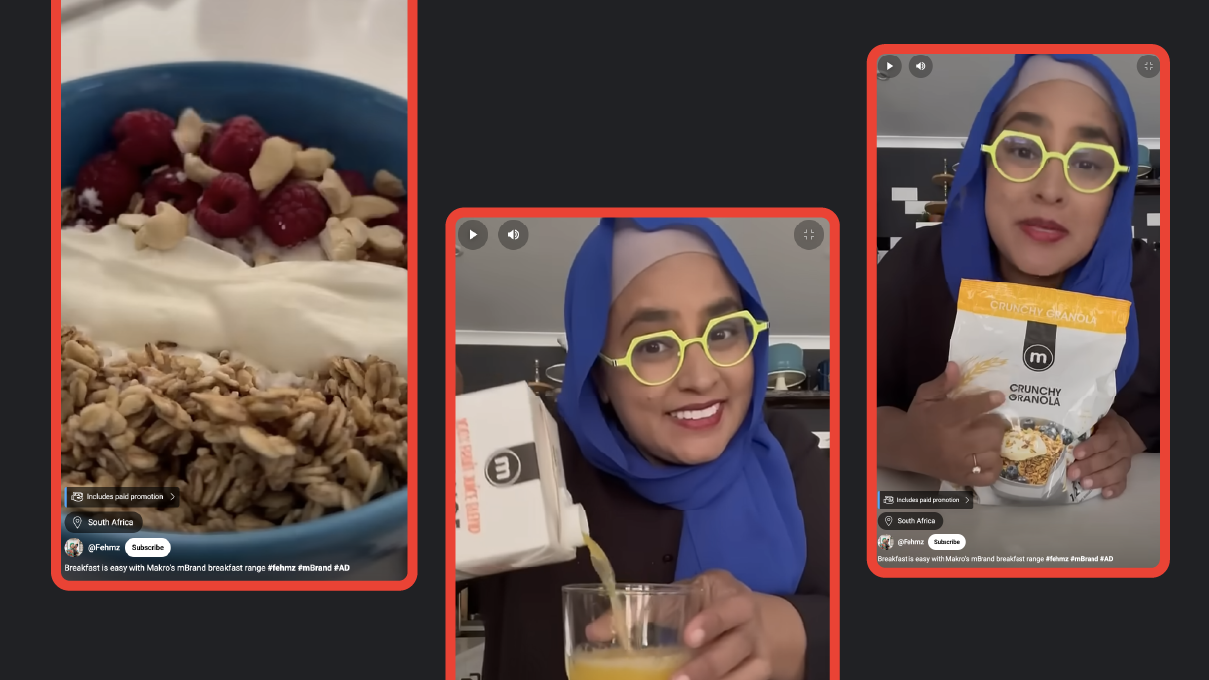
Our approach at The Barn is rooted in a ‘channel-led’ philosophy. This means we design every ad specifically for the platform it will run on. This isn't just about resizing a video; it's about understanding the user's mindset and the ecosystem's unique characteristics. For instance, content native to Shorts is less polished, more authentic, and increasingly reactive to cultural trends.
We knew we had to test whether a native, platform-specific approach to YouTube Shorts could complement our existing long-form strategy.
This decision was further validated by a key finding from one study that showed 47% of YouTube Shorts users aren’t on TikTok.1 This insight was a game-changer for us. By strategically using YouTube Shorts, we could tap into a distinct, valuable audience segment that our other campaigns weren’t reaching.
A/B testing native creative
To get a clear, unbiased picture of YouTube Shorts' impact, we ran a series of A/B experiments with connected Brand Lift Studies. We compared a business-as-usual setup (long-form, non-skippable ads) with one that added native videos into the mix. This is one example of a native video created for Starbucks:
We also looked at the impact of using native creative — content the audience expects on a particular platform — versus simply repurposing traditional bumper ads.
The focus wasn't on media metrics alone. We wanted to measure behavioral outcomes:
- Did people remember seeing the ad?
- Did it increase their brand awareness or consideration?
The answers to these questions would help us shape our short-form video strategy.
Our key findings
Our study revealed some powerful insights that are already shaping our future strategy:
1. A new standard for ad recall
Across our tests, we saw significant increases in ad recall. In one case, a campaign saw its ad recall jump from a 3% lift in a business-as-usual setup to a 9% lift when we incorporated native YouTube Shorts.
In other instances, we saw ad recall figures that were 2 to 4 times higher than our previous benchmarks.

This was a major revelation. Even though Shorts videos are fleeting, the native format and context drove strong memory encoding, proving that they can achieve powerful brand impact in a short amount of time.
2. The power of ‘channel-led’ creative
It's not just about where you advertise, but how. Authenticity is the currency of short-form video. Viewers quickly skip ads that feel out of place.
Our experiments showed a clear correlation between creative that felt native to the platform and creative with higher ad recall. We leaned into trends, used popular audio, and adopted a more organic, creator-style aesthetic.
Our creative team made content that felt authentic to Shorts. Fast-paced, vertical, and organic-looking content — as if a creator had made it.
As a result, we saw a significantly higher lift in ad recall compared to repurposing traditional bumper ads.
3. Move beyond views to measure what truly matters
Perhaps the most important finding was about measurement. In the world of short-form video, view counts can be a misleading metric. We needed to know if our campaigns were actually changing perceptions. We turned to Google’s Brand Lift studies to find out.
Brand Lift allows you to measure the real-world impact of your campaigns by comparing an exposed group to a control group. For us, it was the definitive tool for proving that our Shorts strategy wasn't just generating views — it was building the brand. Our test showed we produced double the awareness lift of our business-as-usual campaigns.
From findings to action, and beyond
We don’t view YouTube Shorts as a separate, experimental channel. It's an essential, integrated component of our overall YouTube and digital marketing strategy.
By truly understanding the user, the platform, and the creative approach needed to succeed, we've found a data-backed solution to the attention crisis.
The next step for us is to embed the use of content creators even further in our channel-led setup. For YouTube Shorts this means dialing up the authentic voice further with inhouse productions and partnering with creators. But for now, we're confident in this learning: to truly capture attention, you need to go native and fully commit to the platform.